돈 안 쓰고 롱테일 키워드 찾는 법
롱테일 키워드가 왜 좋은지는 이미 아실 겁니다. 경쟁이 낮고, 전환 의도가 높고, 작은 사이트가 이기기 쉽다. SEO에서 가장 닳도록 반복되는 주장이라 굳이 다시 읊지 않겠습니다.
아무도 솔직하게 안 다루는 건 "실제로 찾는" 부분이에요. 대부분의 글은 방법 네 개를 체크리스트처럼 던져놓고 다 똑같이 유용한 척합니다. 체크리스트가 전략은 아닌데 말이죠. 그 넷은 동등하지 않아요. 두어 개가 일을 거의 다 하고, 나머지는 쇼입니다. 그래서 깔끔한 목록 대신, 제가 실제로 손이 가는 방법을 신뢰하는 순서대로 적어보겠습니다.
일을 거의 다 하는 한 가지 방법
자동완성 채굴은 무료 롱테일 발굴 방법 중 압도적으로 가장 유용합니다. 딱 하나만 배운다면 이거예요.
이게 잘 먹히는 이유는, 자동완성 데이터가 "실제 검색의 거르지 않은 증거"이기 때문입니다. 사람들이 검색할지도 모르는 것에 대한 추측이 아니라, 실제로 검색한 것의 기록이에요. 구글은 의미 있는 검색량이 없으면 자동완성에 그 문구를 넣지 않습니다.
핵심은 재귀적으로 하는 겁니다. 대부분은 1회만 합니다. 씨드 입력하고 제안 10개 받고 끝. 그렇게는 가치가 복리로 안 쌓여요. 각 제안을 새 씨드로 다시 입력해야 합니다. 세 번 돌리면 진짜 의도가 담긴 수백 개의 문구가 손에 들어옵니다. (씨드 자체의 개념이 헷갈리면 씨드 키워드 글을 먼저 보세요.)
이 재귀가 돌아가는 모습은 실제로 이렇습니다. 씨드 하나를 몇 단계 펼친 화면이에요:
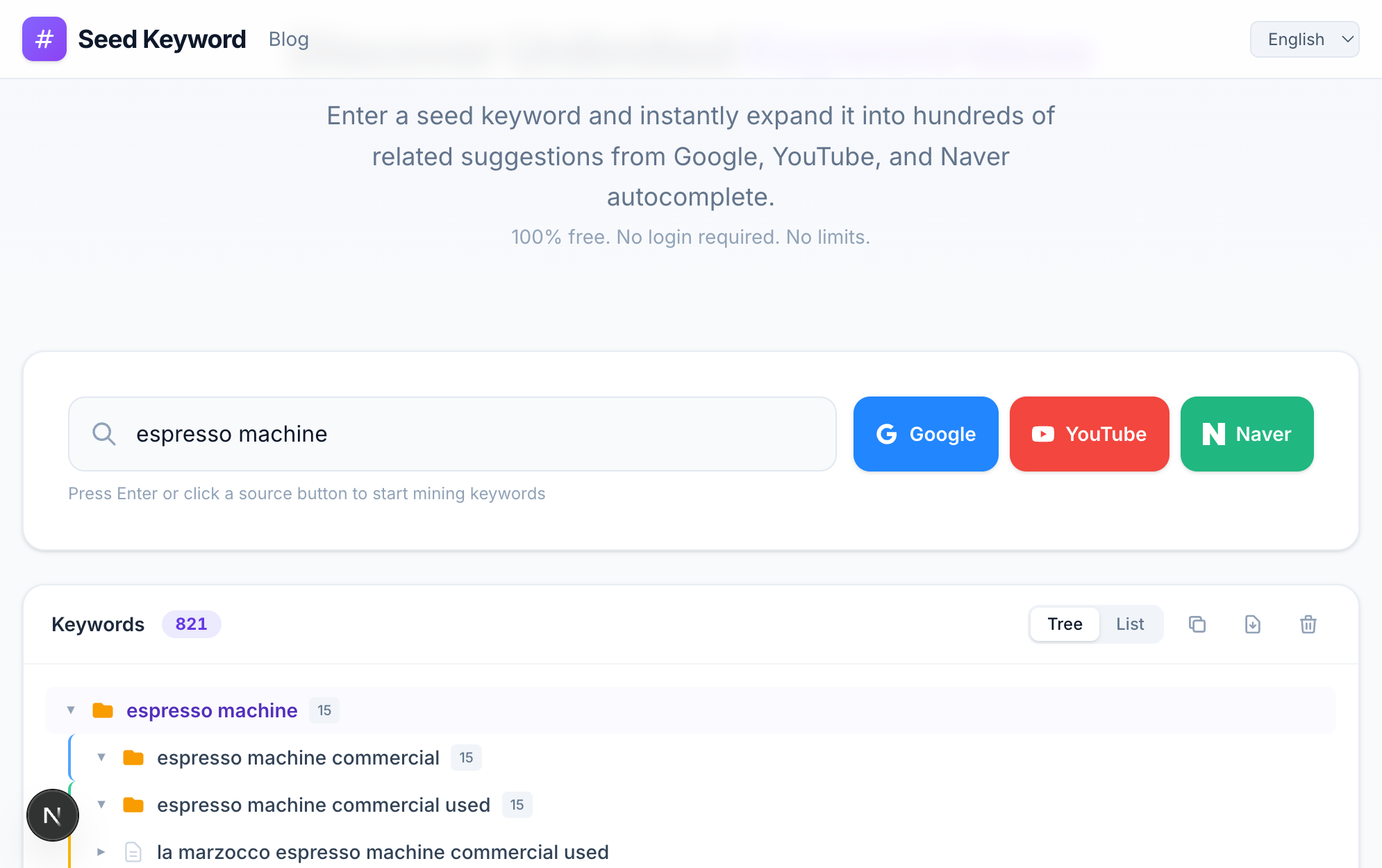
노드 하나하나가 실제 자동완성 결과이고, 그게 다시 다음 단계의 씨드가 됩니다. "수백 개의 문구"는 여기서 나와요. 직접 타이핑하는 게 아니라 재귀가 대신 해주는 거죠.
더 효과적으로 만드는 몇 가지:
- 자음/초성 접두사를 써라. "에스프레소 머신 ㄱ", "에스프레소 머신 ㄴ" 식으로요. 글자마다 다른 제안이 나와서 커버리지를 체계적으로 넓힙니다. 자동완성 도구는 대부분 이걸 자동화합니다.
- 질문 접두사를 써라. "어떻게", "왜", "뭐가 좋은지", "해도 되나". 질문형 롱테일은 블로그 제목과 구글 "다른 사람들이 찾은 질문" 박스에 깔끔하게 매핑돼서 굉장히 가치 있습니다.
- 여러 소스를 채굴해라. 구글, 유튜브, 네이버는 자동완성 데이터베이스가 따로입니다. 한쪽에서 뜨거운 롱테일이 다른 쪽엔 아예 없을 수 있어요.
대부분의 니치에서 두 시간의 재귀적 자동완성 채굴이면, 6개월 동안 쓸 수 있는 것보다 많은 글감이 나옵니다.
좋긴 한데 약간 과대 포장된 방법
"다른 사람들이 찾은 질문(People Also Ask)" 박스는 유용합니다. SEO 커뮤니티가 떠드는 만큼 강력하진 않아요.
문제는 이겁니다. PAA 질문은 이미 순위에 오른 페이지를 포함해 웹 전반에서 끌어옵니다. 그래서 그 질문을 노리면, 애초에 구글이 인용할 만큼 잘 답한 그 페이지와 경쟁하게 되는 경우가 많아요. PAA 박스는 답 안 된 질문 목록이 아니라, 구글이 이미 괜찮은 답을 찾은 질문 목록입니다.
PAA를 무시하란 게 아니라, 올바르게 쓰란 거예요:
- 직접 타깃 목록이 아니라 관련 앵글의 영감으로.
- 글을 확정하기 전에 상위 주제의 질문 지형을 파악하는 용도로.
- 더 큰 글 안의 FAQ 섹션 소스로, 여러 관련 질문을 한 글에서 다룰 때.
저는 이제 PAA 질문을 글 하나의 유일한 초점으로 거의 안 씁니다. 노력 대비 트래픽 전환이 자동완성 롱테일보다 나빠요.
제가 심하게 과대평가됐다고 보는 방법
"알파벳 수프" 기법, 씨드 뒤에 글자를 하나씩 붙이는 거요. 모든 롱테일 글에 나옵니다. 나쁘진 않아요. 근데 그냥 자동완성 채굴의 원시 버전입니다.
재귀 확장하는 자동완성 도구가 있다면 알파벳 수프는 새로 주는 게 없어요. 도구가 이미 커버합니다. 도구가 없어서 손으로 한다면 괜찮지만, 자동화 가능한 과정을 수동으로 하는 거라는 걸 알고 계세요. 별개의 전략으로 취급하지 마세요.
자꾸 잊는데, 잊으면 안 되는 방법
커뮤니티입니다. 디시, 클리앙, 더쿠, 레딧, 니치 카페, 디스코드. 이걸 읽는 게 키워드 리서치에서 가장 레버리지 높은 일 중 하나인데 저도 자꾸 덜 씁니다.
이게 가치 있는 이유: 커뮤니티 대화는 사람들이 검색어처럼 보이려 애쓰지 않을 때 쓰는 정확한 표현을 드러냅니다. 커피 커뮤니티 사람들은 "20만 원 이하 가성비 그라인더"라고 안 물어요. "바라짜 엔코어 그냥 사도 되나 아니면 돈 더 모아서 1zpresso 가야 하나"라고 묻습니다. 후자는 어떤 키워드 도구도 못 잡는 진짜 의도예요. 아무도 그 형태로 구글에 입력하지 않으니까요.
이 대화들이 주는 두 가지:
- 아직 닳지 않은 주제 아이디어.
- 제목과 소제목에 그대로 써야 할, 독자가 실제로 쓰는 어휘.
키워드 도구 돌리는 것보다 느립니다. 하지만 SEO 콘텐츠에 남은 몇 안 되는 해자(moat) 중 하나예요. 도구는 키워드 발굴의 절반을 평준화합니다. 실제 사람을 읽는 건, 기술적으로 최적화됐지만 생기 없는 콘텐츠와 진짜 울림 있는 콘텐츠를 가르는 부분입니다.
구글 서치콘솔은?
이미 트래픽이 좀 있는 사이트라면, 서치콘솔은 과소사용되는 롱테일 소스입니다. 11~30위 사이에 노출되는 검색어들을 보세요. 구글이 이미 "이 페이지 관련 있네" 하고 고려는 하는데, 아직 1페이지엔 못 올린 키워드들이에요. 맨바닥에서 시작하는 것보다 따기 쉬운 경우가 많습니다.
물론 트래픽이 0이면 도움이 안 됩니다. 하지만 몇 달치 노출 데이터가 쌓이면, 서치콘솔은 접근 가능한 최고의 무료 키워드 도구가 됩니다. 그리고 이 색인·노출이 쌓이려면 애초에 모든 글이 서치콘솔에 색인 생성돼야 한다는 점, 이건 따로 강조할 만큼 중요합니다.
순서대로 정리하면
지금 맨바닥에서 콘텐츠 사이트를 시작하고 무료 도구만 쓸 수 있다면, 저는 실제로 이렇게 하겠습니다:
- 자신 있게 쓸 수 있는 씨드 주제 세 개를 고른다.
- 각각에 재귀적 자동완성 채굴을 돌린다. 구글·유튜브·네이버 중 독자에게 맞는 곳에서. 롱테일 200개 이상 리스트를 만든다.
- 그 주제의 커뮤니티 글을 두어 시간 읽으며 독자가 실제로 어떻게 말하는지 파악한다.
- 키워드 리스트를 "내가 클릭할까" 직감 테스트로 거른다. (이 필터는 블로거를 위한 키워드 리서치 습관 글에서 자세히 설명했습니다.)
- 글 10개를 쓰고, 각각 발행 버튼을 누른 뒤 6번으로 간다.
- 색인 3개월 후 서치콘솔을 열어 2페이지 순위의 저과실을 찾는다.
- 그 빈틈을 노려 다음 10개를 쓴다.
이게 답니다. 유료 도구도, 구독도, 화려한 기법도 없습니다. 조각들은 뻔해요. 어려운 건 복리가 쌓일 만큼의 시간 동안 이걸 전부 꾸준히 하는 겁니다.
롱테일 SEO는 발굴 문제로 위장한 인내 문제입니다. 위 방법들은 처리할 수 있는 것보다 많은 키워드를 줄 거예요. 그걸 실행하는 데서 대부분이 실패합니다.